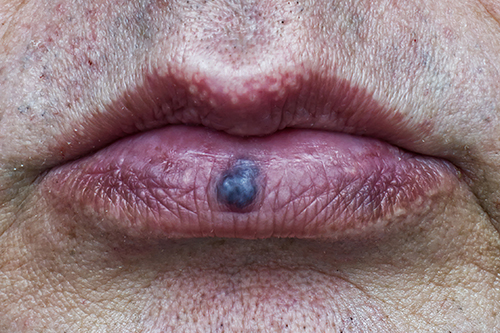
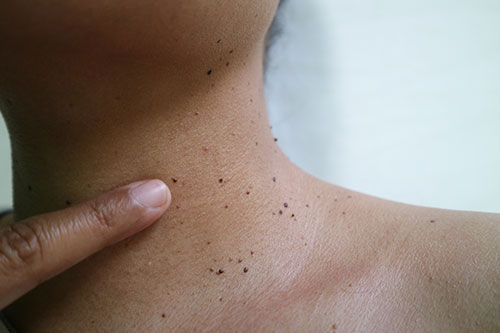
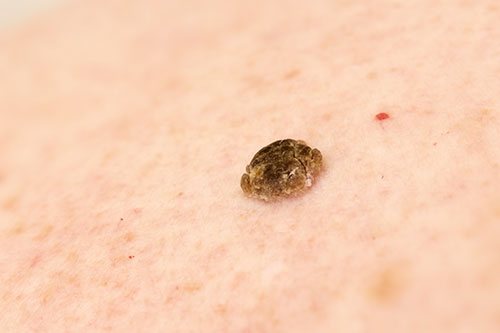
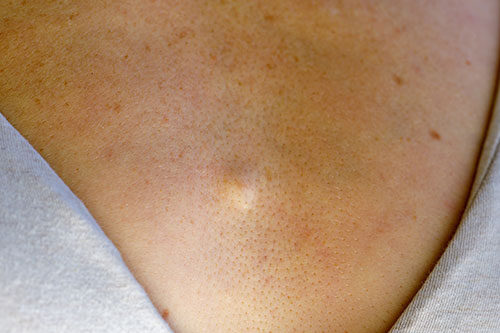
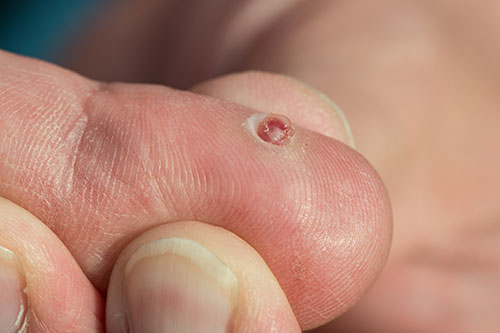
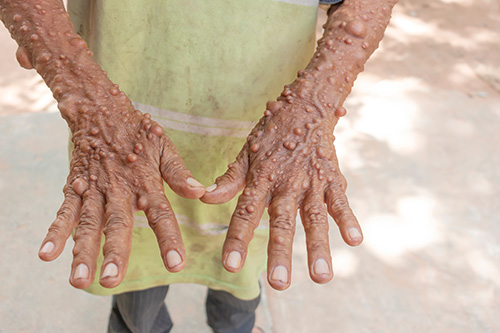
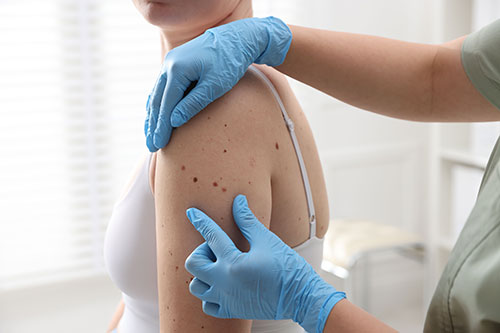
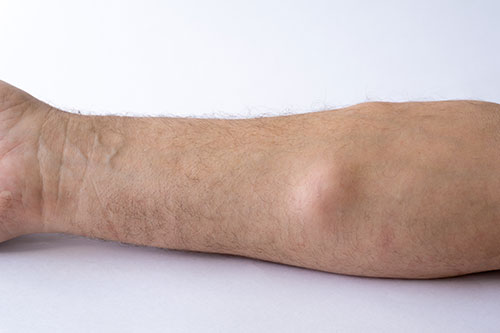
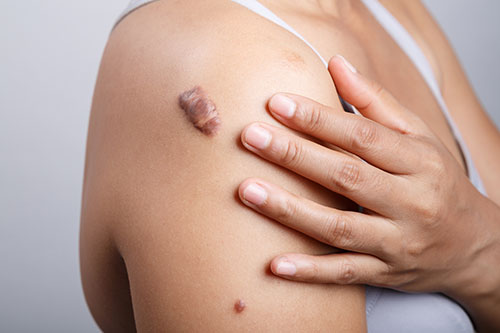
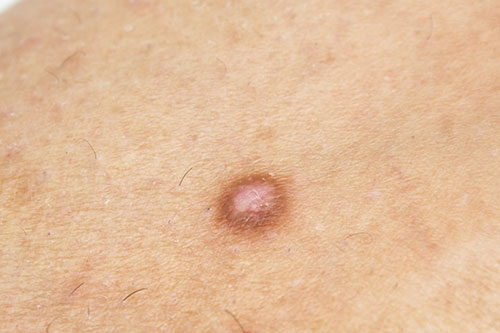
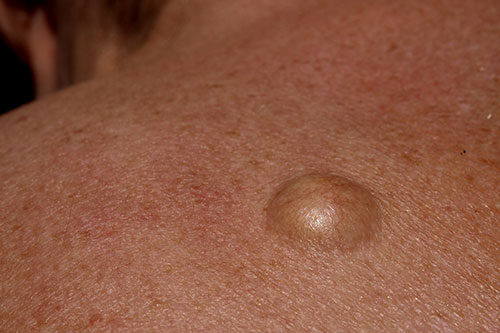
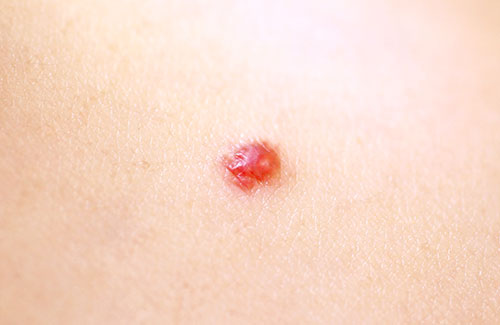
Skin growths happen when skin cells grow or build up in one area. They can show us as:
- Bumps
- Raised spots
- Flat patches
- Discolored areas
- Soft or firm lumps
Most skin growths are benign, which means they are not cancerous. Others can look unusual or suspicious, so it’s important to get them checked to rule out abnormal skin growths or other, more serious concerns.
When needed, we offer safe and effective skin biopsies, diagnostic services, and removals to give you the answers you need and the peace of mind you deserve.
If a growth is connected to a larger skin condition, we may also evaluate it as part of your overall care for other skin conditions or concerns about precancers and skin cancers.
Common causes of skin growths
Skin growths can form for many reasons. Common causes include:
- Sun damage over time
- Aging
- Family history
- Hormone changes
- Blocked oil glands
- Skin irritation or injury
Some growths appear slowly over time, while others can appear more quickly. A professional total body skin exam can help you understand what is happening with your skin and identify any problem areas.
When skin growths may be concerning
You should get any suspicious skin growth, mole or lesion checked if you notice:
- It grows quickly
- It is changing color
- It is changing shape or size
- It starts bleeding
- It becomes painful or tender
- It does not heal
Changes in size, color or shape
Dermatologists often use something called the ABCDE method to check spots on the skin:
- Asymmetry
- Border that looks uneven
- Color that is different in one area
- Diameter larger than a pencil eraser
- Evolving or changing over time
If a growth fits one or more of these signs, it should be evaluated.
Pain, bleeding or rapid growth
Some skin growths become irritated from clothing, shaving or rubbing. Others may grow faster than expected. If a growth exhibits one or more of the following, get it examined by a board-certified dermatologist right away:
- Bleeds without injury
- Causes discomfort
- Grows quickly
- Changes in texture
Types of skin growths we evaluate
Below is a full list of common skin growths we evaluate and treat. We will explain your treatment options in simple terms and if needed, offer safe and effective options, including removal, when appropriate.
Every skin growth is evaluated carefully so you understand what it is and whether treatment is needed. If you notice a new or changing growth, schedule an exam with our team for a professional evaluation.
How dermatologists evaluate skin growths
Visual exams and Dermoscopy
The first step to examining skin growths is a visual skin exam.
Our board-certified dermatologists look at the growth closely. We often use a special magnifying tool called a dermoscope. This tool helps us see details that are not visible to the naked eye.
We take time to listen to your concerns and review your skin carefully. This approach ensures we connect the dots between your symptoms and what we see on your skin.
When biopsy is needed
Sometimes it can be difficult to diagnose a skin growth just by looking at it. If that happens, we may recommend a skin biopsy. A biopsy means we remove a small piece of the growth (or sometimes the entire growth) and send it to a laboratory for further testing and identification.
If we move forward with a complete removal, we proceed with care and attention to appearance.
Before testing or removal, we will review your costs and coverage. Most medically necessary skin growth removal and diagnostic testing may be covered by insurance. Our team can review your benefits and explain your coverage before treatment, so you understand your options and out-of-pocket expenses.